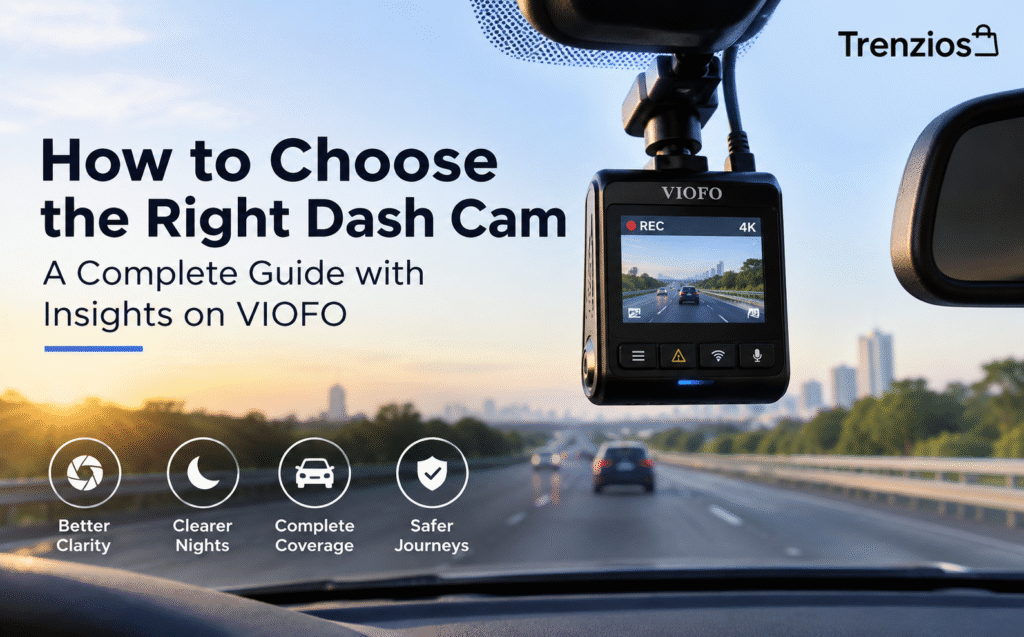
Most car accessories forgive a wrong guess. A phone mount you dislike gets swapped; a seat cover that doesn’t fit gets returned. The dash cam is the exception — it’s the one product whose entire job is to matter on the single worst day you hope never comes, and “good enough” genuinely isn’t. Worse, you only discover whether it worked after the moment has passed: a camera that smears a number plate at night, or that quietly stopped recording when its memory card failed, has let you down at the one thing it was for. Insurers and police increasingly accept dash-cam footage, but only footage that is clear, complete and time-stamped actually settles an argument.
VIOFO has spent longer solving this than almost anyone in the category. Building professional dash cameras since 2010, it is now trusted by more than 10 million drivers in over 70 countries, and its cameras have been specified for demanding fleet work, including a deployment with the Malaysian Police. Its reputation rests on a simple idea: put the best available sensor in the camera, make parking protection genuinely work, and back it with an 18-month warranty. Here’s how to choose one — and what actually matters at each step.
Step 1: Start With the Sensor, Not the Megapixel Count
Before screen size or colour of the housing, look at the image sensor. Resolution numbers sell cameras, but the sensor decides whether a plate is legible at dusk, in rain, or under a sodium streetlight. A larger, more light-sensitive sensor gathers more information in exactly the conditions where cheaper cameras produce a bright blur, and no amount of “4K” on the box can add detail that was never captured.
This is why VIOFO’s current range is built around Sony STARVIS 2 sensors — the same family used in professional security cameras. The flagship A329S and A229 Pro pair a large 1/1.8-inch, 8-megapixel IMX678 with a bright F1.8 lens; the A229 Plus and the compact VS1 use the STARVIS 2 IMX675. Choosing a STARVIS 2 camera means the low-light performance was engineered in, not upscaled afterwards. Your job narrows to picking how many angles you need and which features fit your driving.
Step 2: Prioritize Night Footage and Plate Readability
Daytime motorway footage flatters every camera. Night is where the margins are thinnest: oncoming headlights blow out the very plate you need, dark stretches swallow detail, and a car moving at speed turns into a streak. Three things separate usable evidence from a pretty video. First, HDR that balances bright and dark areas in the same frame — VIOFO quotes roughly 2.5× wider dynamic range with HDR on the A329S. Second, a high frame rate: the A329S records true 4K at 60 frames per second, which freezes motion so a plate stays sharp rather than smearing across the frame. Third, a CPL filter on the lens to cut dashboard reflections and windscreen glare, which VIOFO includes in the box with the A329S and offers for its other models.

When comparing cameras, treat night performance as a headline feature rather than fine print. A camera that reads plates at 2 a.m. in the rain is doing the harder, more complete job — and that is the footage you will actually need.
Step 3: Cover Every Angle You Actually Need
A front camera answers most questions, but not all of them. Rear-end collisions, side-swipes in car parks, and disputes with passengers each happen out of view of a single lens. VIOFO builds the same core cameras in one-, two- and three-channel versions, so you can match coverage to how you drive rather than paying for angles you don’t use:
- One channel (front only) — the A119 MINI 2 (2K at 60 fps, from around $160) or the A119M Pro (4K, around $210) for commuters who want discreet, high-quality forward evidence.
- Two channels (front + rear) — where most drivers should land. The A229 Plus (2K front and rear, around $230), A229 Pro (4K + 2K, around $350), A229 Ultra (4K + 4K, around $410) and the flagship A329S 2CH (4K/60 fps + 2K, around $460).
- Three channels (front + rear + cabin) — for rideshare, taxi and family cars. The A329S 3CH (around $520) and A229 Pro 3CH add an infrared cabin camera with a 210° fisheye view that works in complete darkness.
- Specialist rears — a waterproof (‑W) rear camera for pickups and vans without a rear window, a telephoto rear with 4× optical zoom (Tele/T models) to read plates several cars back, and the MT1 for motorcycles.
Because every tier shares the same sensors, app and accessories, you can start with a front-only camera and add a rear or cabin unit later without relearning a new system. That continuity is worth real money and real sanity.

Find the Right Setup for Your Car
▶ SHOP DASH CAMS at VIOFO
Step 4: Make Parking Mode Work While You’re Away
A surprising share of vehicle damage happens with nobody in the driver’s seat: the supermarket door ding, the hit-and-run on a residential street, the overnight break-in. A dash cam that only records while the ignition is on misses all of it. Parking mode is the answer, but not all parking modes are equal. Look for buffered parking mode, which keeps a rolling pre-record so the saved clip includes the seconds before the impact — the part that shows who hit you — rather than starting only after the bump.
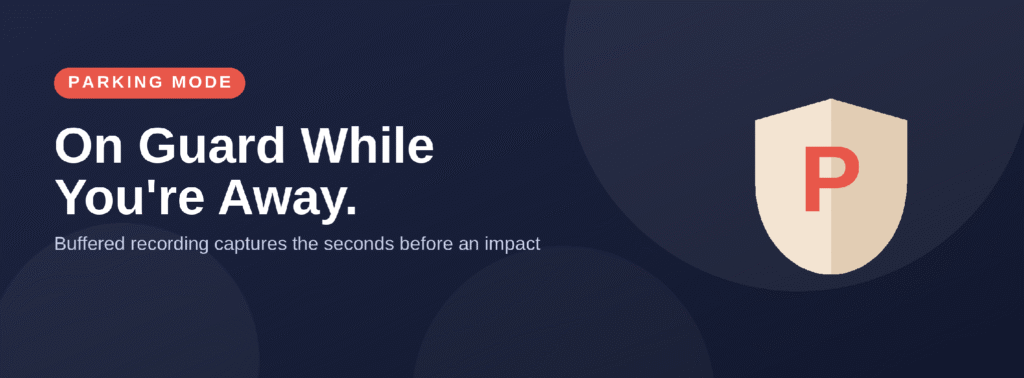
VIOFO goes a step further on the A329S with an automatic Hybrid Parking Mode: the camera records normally while there is activity, then drops into ultra-low-power impact detection to protect your car’s battery for longer. Powering it is straightforward. A hardwire kit (HK4 for most models, HK6 for the A329S) connects to the fuse box with low-voltage cut-off so you never wake to a flat battery; the OP100 OBD-II cable offers a plug-in route to 24-hour coverage; and the BP100 battery pack (7,650 mAh, expandable with the EP100) runs parking mode without touching the car’s electrics at all. Whichever you choose, install it once and parking protection simply happens.
Step 5: Build It to Survive the Car
A dashboard is one of the harshest places electronics can live — baking in summer, freezing in winter, vibrating constantly. Two design choices decide whether a camera is still working in year three. The first is power storage: VIOFO builds its cameras around supercapacitors rather than lithium batteries, which tolerate heat far better and don’t swell or fade the way a battery does in a hot car. The second is the memory card, the single most common point of failure in any dash cam. Dash cams rewrite footage continuously, which destroys ordinary cards; use an industrial-grade, high-endurance microSD (U3, A2, V30) sized for your channels, and format it periodically. For drivers who want days of parking footage rather than hours, the A329S also supports an external SSD of up to 4 TB.
Smaller details compound over years, too: a slim coaxial rear-camera cable that tucks cleanly into trim, a CPL filter that lifts the dashboard reflection out of every frame, and firmware that is actually maintained. These aren’t luxuries; they are the difference between a camera you trust and one you stopped checking.
Step 6: Set It Up Right, Register It, Then Forget It
The best camera is only as useful as the clip you can actually get off it. VIOFO’s current models use Wi‑Fi 6 dual-band connections that move files to your phone up to 3× faster through the VIOFO app, so saving evidence at the roadside takes a minute rather than a lunch break. Built-in GPS stamps speed and location onto every clip, which is exactly the context an insurer asks for, and voice control lets you lock a recording hands-free the moment something happens. Two minutes of admin protects the purchase: register the camera to activate the 18-month warranty, keep firmware updated through the app, and buy from VIOFO directly or an authorized seller so you are covered by its 14-day return policy and genuine support.
Bonus: A 60-Second Footage Check
A few monthly habits catch the failures that only show up when it’s too late. Pull one night clip and confirm you can read a plate on a moving car — if you can’t, adjust the angle or add the CPL filter. Check that the date and time are correct, because a wrong timestamp undermines otherwise perfect footage. Format the memory card from the camera’s menu, and replace it at the first sign of errors. Make sure the rear lens hasn’t been blocked by a headrest or a load, and that the front mount hasn’t crept down the windscreen in the heat. Finally, tap the parked car and confirm parking mode wakes and saves a clip. None of this takes long, and all of it is free.
Three Mistakes This Playbook Prevents
First: shopping on “4K” alone. Resolution without a capable sensor produces sharp footage in daylight and nothing usable at night, which is when a large share of incidents happen — a STARVIS 2 sensor with real HDR is the floor, not the upgrade. Second: treating parking mode as an afterthought. A camera with no hardwire kit and no buffered recording captures nothing while you shop, which is where most damage occurs. Third: neglecting the memory card. A cheap card that failed silently in month four is the most common reason a driver with a dash cam still has no footage — buy a high-endurance card and check it.
Final Thoughts
Choosing a dash cam feels like a small decision right up until the day it isn’t. It doesn’t have to be complicated. Start with the sensor, insist on real night performance, cover the angles you actually need, make parking protection automatic, and build for the heat and the years. VIOFO has been solving exactly this problem since 2010, and the through-line across fifteen years and ten million drivers is the same one that should guide your choice: evidence that is clear, complete and there when you need it — every single day.
Explore VIOFO’s Full Range