
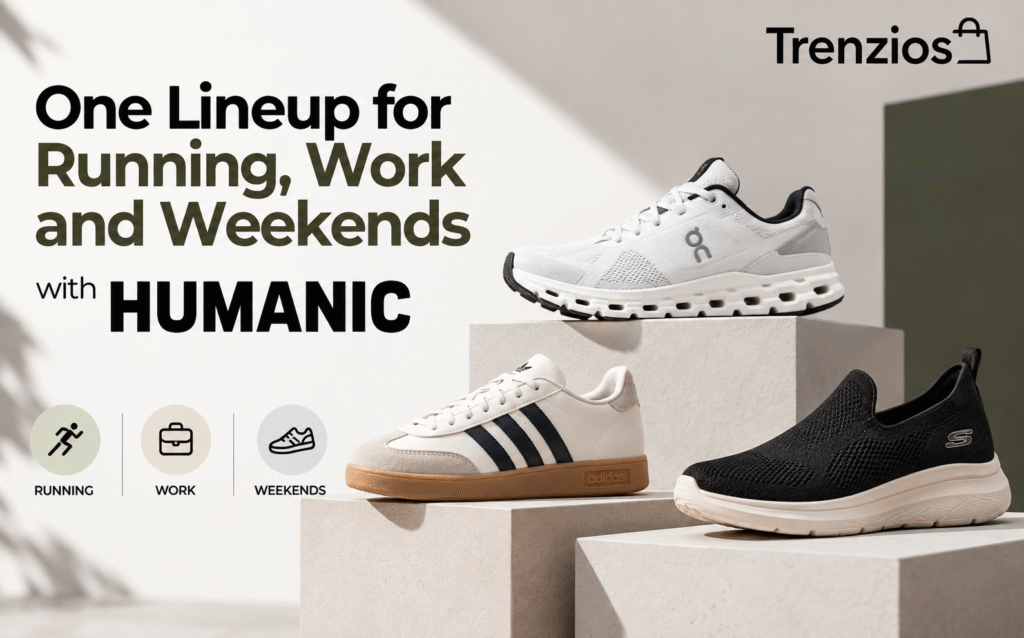
Sneakers are the one shoe category everybody owns too many of and still never has the right pair in. The drawer fills with near-identical white trainers while the actual jobs go unserved: the run that deserves real cushioning, the twelve-hour day that punishes thin soles, the outfit that a scuffed gym shoe quietly ruins. The problem isn’t quantity — it’s that most sneaker collections are bought one impulse at a time, with no plan for what each pair is for. Runners call this out with a word the rest of us should borrow: equipment. Some sneakers are equipment. Some are style. Confusing the two wears out both.
HUMANIC is an ideal place to fix that, because its sneaker wall is genuinely deep on both sides of the line. One of Central Europe’s best-known shoe retailers — Austrian to the core, with roots in the Graz shoe trade via parent company Leder & Schuh going back to 1872 — it stocks the performance names (On, HOKA, Brooks, ASICS, Salomon, New Balance) next to the street icons (adidas, Nike, Puma) and the comfort specialists (Skechers), for women, men and kids. The Austrian store backs it with a €10 newsletter bonus, free delivery to any HUMANIC store, 14-day returns, and a customer club that issues personal vouchers. Here’s how to turn a drawer of random trainers into a working rotation — and what matters at each step.
Step 1: Audit the Sneaker Drawer
Empty it out and sort by job, not by brand. How many kilometres a week do you actually run — and in what? How many hours a day are you on your feet, and which pair carries that load? Which sneaker goes with most of your wardrobe, and which three haven’t left the shelf this year? Most people discover the same imbalance: five lookalike street pairs, zero real running shoes, and nothing they’d choose for a long day of standing. Write down the two or three jobs your week actually contains. That list — not the new-drop feed — is the shopping brief.
Step 2: Separate Sport From Street
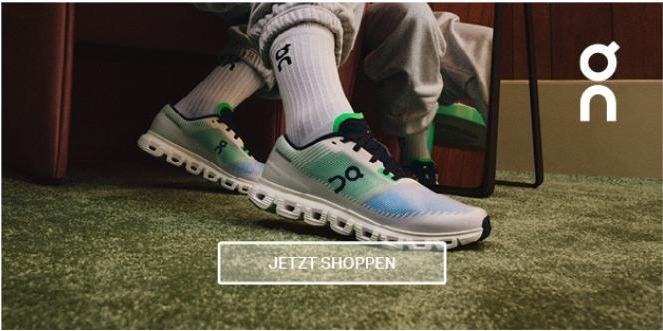
A running shoe is engineering: cushioning foams tuned for impact, rocker geometries that roll you forward, uppers built for kilometre fifty rather than photo one. That engineering is exactly what makes it wrong as an everyday shoe — soft midsoles collapse faster under casual all-day wear, and a run in a fashion sneaker is a joint-punishing false economy. Keep the categories apart: pick the running pair by feel and mileage (this is where On’s CloudTec, HOKA’s max-cushion stacks and Brooks’ stability builds genuinely differ — try several), and let the street pair be chosen by your wardrobe. One pair per job beats one pair for everything, every time.
Step 3: Take Comfort Tech Seriously
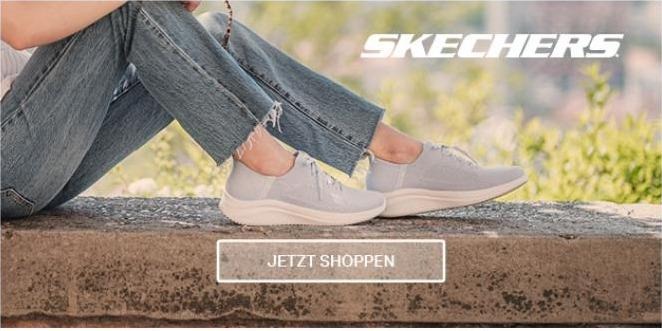
Between sport and style sits the most underrated category on the wall: comfort sneakers built for standing, walking and errands — the actual majority of most people’s hours. Slip-in constructions, memory-foam footbeds and wide-fit options (Skechers has built an empire on precisely this) turn the school run, the commute and the long shift into a different experience than a flat-soled fashion trainer ever will. If your audit showed more standing than sprinting, this is where the money goes first. Comfort is measurable at hour six; buy for hour six.
Every Brand. One Sneaker Wall.
▶ SHOP SNEAKER TRENDS at HUMANIC
Step 4: Build the Three-Sneaker Rotation
For most wardrobes the working answer is three pairs: a true running or training shoe (the equipment), a clean neutral street pair (the stylist), and a comfort slip-on or walker (the workhorse). Rotation isn’t indulgence — cushioning foam needs roughly a day to decompress after hard use, so alternating pairs measurably extends every midsole’s life. It also keeps the street pair clean, because it’s no longer being sacrificed to rain, gyms and gravel. Three deliberate pairs, each doing its own job, will outperform and outlast six impulse buys — and at a multi-brand wall you can assemble all three in one order.
Step 5: Style the Street Pair on Purpose
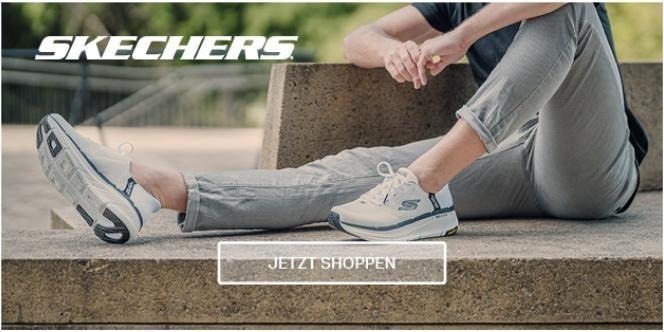
The street sneaker is a wardrobe decision, so make it like one. Neutrals — white, cream, grey — multiply across outfits; a loud pair is a statement you must actually intend. Retro runners and slim silhouettes dress up under trousers; chunkier soles anchor casual looks. HUMANIC’s Sneaker Trends edits exist precisely to shortcut this — the season’s directions curated across brands, so you can pick a lane instead of scrolling one brand’s catalogue. One honest rule keeps the drawer sane: the new street pair must earn its place by going with more of your wardrobe than the pair it replaces.
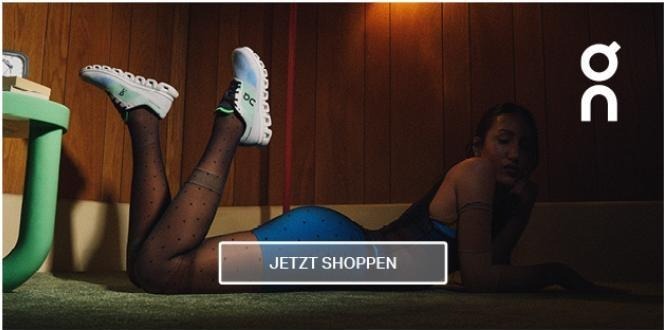
Step 6: Buy Smart — Bonus, Club and the Kilometre Rule
Two minutes of admin makes the same sneakers cheaper. Sign up for the newsletter before ordering — the Austrian shop starts you with a €10 bonus. Join the HUMANIC Club and let the personal vouchers discount the pairs you were buying anyway. Ship free to your nearest store if you’d rather feel the cushioning before committing, and remember the 14-day return window — order two sizes when in doubt. And retire running shoes by kilometres, not by looks: most midsoles are done between 500 and 800 km, long before the upper shows it. A ‘fine-looking’ dead shoe is how knees end up paying for savings.
Bonus: A 60-Second Sneaker Care Routine
A few habits keep a rotation feeling new. Air pairs out after wear instead of boxing them damp. Brush dried dirt off mesh; hand-clean with mild soap rather than the washing machine, which kills glue and foam. Keep a rough kilometre count on the running pair — a note on your phone is enough. And actually rotate: the cheapest sneaker-care product in the world is the second pair getting its rest day. None of this takes long, and all of it is free.
Three Mistakes This Playbook Prevents
First: one pair for everything. The all-purpose sneaker does every job badly and dies young — the three-pair rotation costs less per wear and serves every hour better. Second: buying running shoes on looks. Cushioning, stability and fit at kilometre ten are the product; colour is packaging — try the performance brands side by side and choose with your feet. Third: paying list price out of habit. The €10 newsletter bonus, club vouchers and free store delivery are sitting there; skipping them is a voluntary surcharge on every pair.
Final Thoughts
A sneaker drawer becomes a sneaker system the day each pair has a job. Audit the real week, split equipment from style, respect the comfort hours in between, run a three-pair rotation, and let the club and newsletter quietly fund the habit. HUMANIC’s sneaker wall — performance, street and comfort brands side by side, backed by a century and a half of shoe trade — is built for exactly this kind of deliberate buying. The through-line is the same one that should guide every pair you add: not ‘do I like it?’ but ‘which job does it take over — and from whom?’
▶ EXPLORE THE SNEAKER WALL AT HUMANIC