
How to grow useful herbs and vegetables—even with just a balcony, patio or sunny windowsill
You don’t need an allotment, a large backyard or years of gardening experience to enjoy home-grown food. A few containers, the right plants and a little routine can turn even a compact outdoor corner into a productive green space. For many city dwellers, growing herbs, salad leaves or tomatoes is a practical first step towards a more hands-on relationship with food.
A small garden will not replace the weekly grocery shop, and it does not need to. The pleasure is in picking fresh leaves when you need them, learning how plants grow and making better use of the space you already have.
Start with the space you actually have
Before buying pots or seeds, spend a day noticing the light. Which areas receive several hours of direct sun? Which stay bright but shaded? Is the balcony exposed to strong wind? Does the windowsill become very hot? These details matter more than the size of the space.
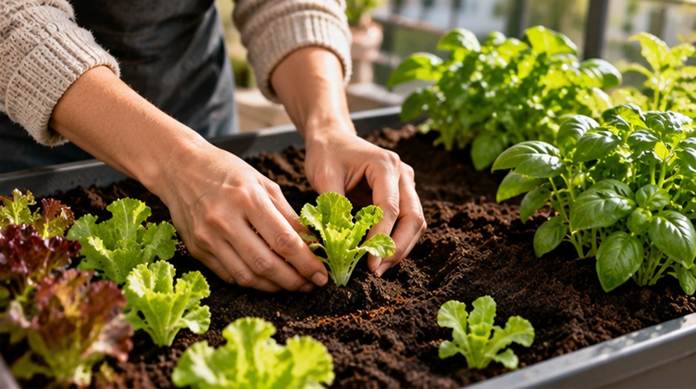
Fruiting vegetables such as tomatoes and peppers generally need plenty of sun. Leafy greens and some herbs can tolerate partial shade. If your space is windy, choose stable containers and avoid placing tall, top-heavy pots where they could fall. Check balcony load limits and building rules before installing large planters.
Choose plants that reward beginners
The best first plants are those you already enjoy eating and can realistically care for. Start small:
- Basil and parsley: Useful kitchen herbs that can be harvested gradually; basil usually prefers warmth and sun.
- Chives and mint: Good container candidates. Keep mint in its own pot because it spreads vigorously.
- Lettuce and rocket: Compact salad options for window boxes; sow small amounts at intervals for a more continuous harvest.
- Radishes: A compact crop that can provide a satisfying early result in a suitable container.
- Cherry tomatoes: A rewarding choice for a sunny balcony, with a sufficiently large pot and plant support.
Build a simple container garden
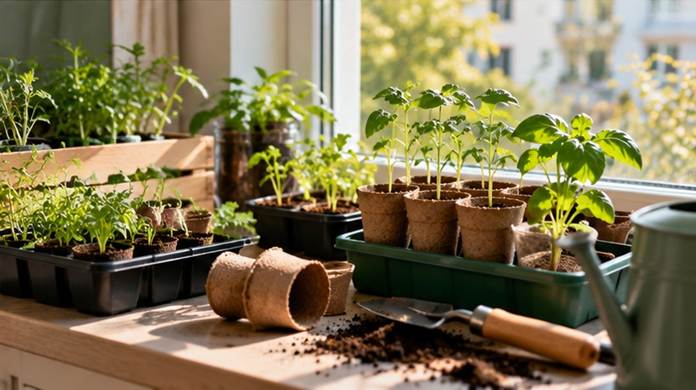
Containers make it possible to garden without digging beds. Choose pots with drainage holes, use a suitable potting mix and match container size to the plant. A tiny pot can dry out quickly and restrict root growth, while a container without drainage can leave roots sitting in excess water.
Group plants with similar watering and light needs. Place taller plants where they will not shade smaller ones, and leave enough room to reach each pot. Vertical planters can make use of height, but secure them properly and avoid creating a falling hazard.
A routine that keeps the garden manageable
Check soil moisture with your finger rather than watering automatically every day. Water thoroughly when the plant needs it, allow excess water to drain and adjust as temperatures change. During hot or windy weather, containers may dry faster.
Remove yellowing leaves, look underneath foliage for pests and harvest herbs regularly where appropriate. Follow the seed packet or plant label for spacing, sowing times and feeding advice. Keep a simple note of what you planted and when.
Make the harvest part of everyday cooking
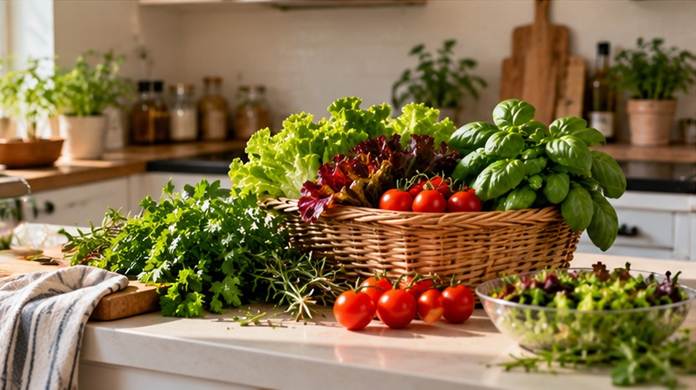
A small harvest can still change the way you cook. Snip basil into pasta, add parsley to a dressing, scatter chives over potatoes or pick salad leaves just before lunch. Harvest only what you need and avoid removing too much foliage at once. If you grow more than you can use, explore safe, tested methods for storing or preserving the produce.
Learn as you grow
Gardening is full of small experiments. One variety may thrive on your balcony while another struggles; a pot in the brightest corner may need more frequent watering than you expect. Treat setbacks as information, change one thing at a time and keep track of what works.
Kopp Verlag’s self-sufficiency and gardening sections bring together books and practical guides on growing vegetables, garden planning, herbs, harvesting, cooking and preserving. The range includes titles focused on making more use of what you can grow at home. Browse the [self-sufficiency collection] for ideas suited to your interests and experience level.
You can also explore Kopp Verlag’s wider [selection of books and practical guides], including gardening, nature and do-it-yourself themes.
Your first-week starter plan
- Observe your balcony or windowsill and note how much direct sunlight it receives.
- Choose two or three plants you genuinely use in the kitchen.
- Select containers with drainage and an appropriate growing medium.
- Read the seed packet or plant label before sowing or planting.
- Set a regular time to check moisture, growth and signs of pests.
- Harvest modestly and note what you would change next time.
A greener corner starts with one pot
The most successful small garden is not necessarily the one with the most plants. It is the one that fits your space, your schedule and the food you enjoy. Begin with a pot of herbs or a window box of salad leaves, learn what your conditions allow, and build from there.
READY TO GROW SOMETHING OF YOUR OWN? Explore gardening, self-sufficiency and practical how-to books at Kopp Verlag.
Affiliate disclosure: This article contains an affiliate link. If you make a purchase through it, the publisher may earn a commission at no additional cost to you.