
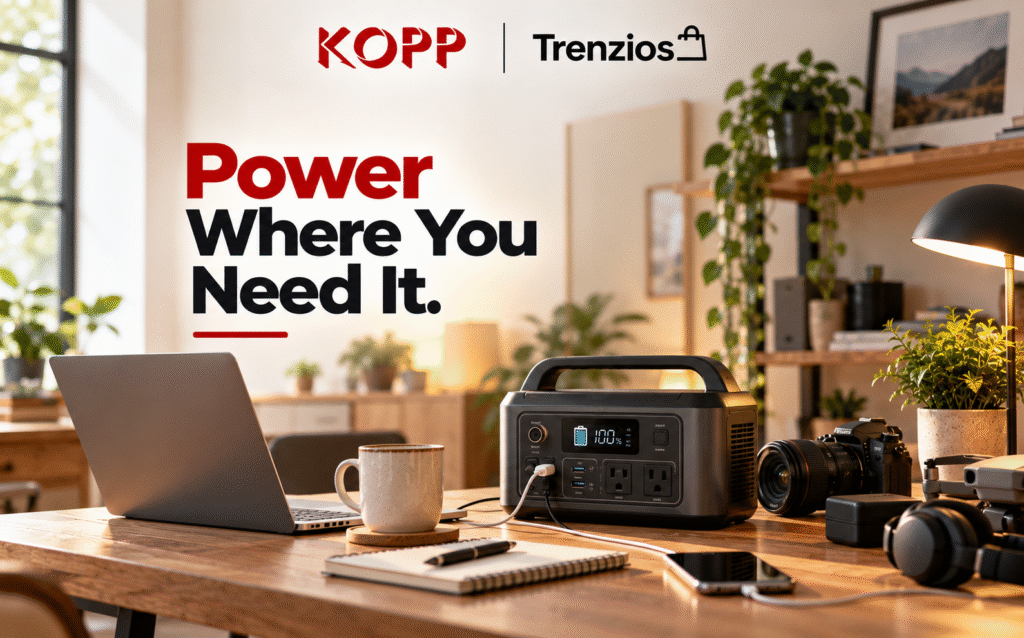
A practical guide to portable power stations for home working, weekend escapes and everyday preparedness
A power cut can interrupt more than the lights. It can pause a work call, switch off the home router and leave phones running low just when you need them. Away from home, the same challenge appears in a different form: a campsite or camper van may be short on convenient outlets. Portable power stations offer one way to bring stored electricity to places where a wall socket is not available.
They are not a substitute for a whole-house electrical system, and they are not all designed for the same jobs. The useful question is not simply how powerful a device looks, but what you actually want to keep running—and for how long.

Start with the devices that matter most
Make a short list before comparing models. A phone, laptop, Wi-Fi router and LED lamp have very different energy needs from a kettle, heater or other high-draw appliance. Check each device’s rated wattage and the power station’s output limits. Then estimate how many hours you need it to run.
A simple planning exercise helps prevent overbuying. Separate essentials from conveniences, decide which devices may need to run at the same time, and remember that real-world runtime depends on the connected load, conversion losses, battery condition and operating conditions. Manufacturer estimates are useful starting points, not guarantees.
Four situations where portable power can be useful
1. Keeping a home workspace going
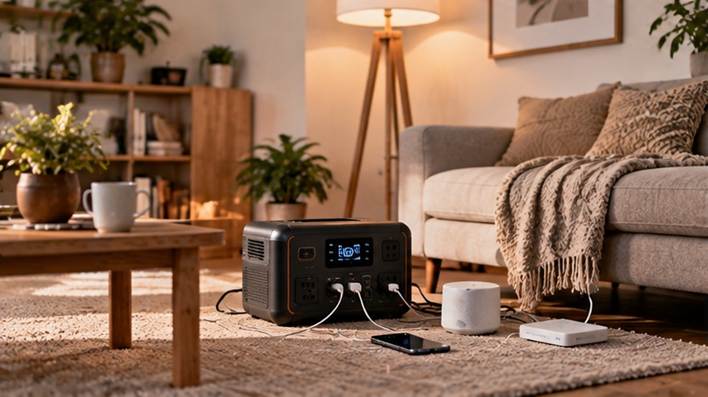
For remote workers, a charged laptop and a working internet connection can make a short disruption easier to manage. A portable power station may support selected low-power devices, provided its output and capacity are suitable. Check whether your router can be powered directly and whether your laptop supports the charging method offered by the unit.
2. Making camping more comfortable
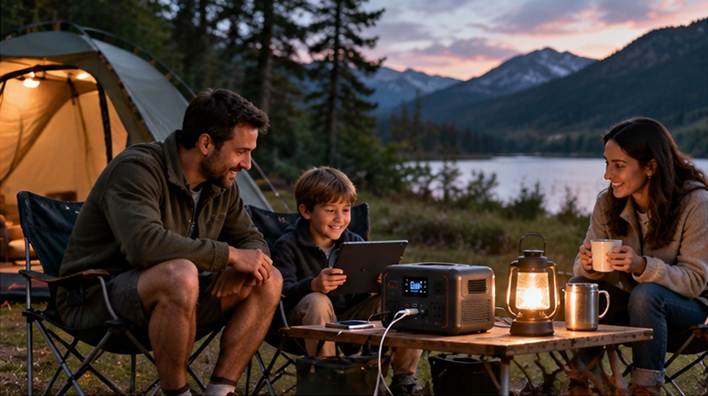
On a campsite, stored power can be useful for charging phones, cameras, lights and other compatible small devices. It can make a trip more convenient without turning the outdoors into a full household setup. Before travelling, check campsite rules, charging options, transport restrictions and the device’s operating instructions.
3. Having a modest backup for selected essentials
For a brief outage, some households may want to keep a few essentials available: communication devices, a lamp, or a small router. Decide in advance what takes priority. A portable unit should only be connected to appliances within its rated limits, and it must never be improvised as a way to feed electricity back into household wiring.
4. Supporting outdoor projects and mobile setups

A portable power source can also be handy for photography, hobby projects, garden tasks or a camper-van setup. Think about where the unit will sit, how it will be protected from moisture and dust, and whether its weight and dimensions are manageable for your plans.
What to compare before choosing one
- Battery capacity: Usually expressed in watt-hours (Wh); it indicates stored energy, not a guaranteed runtime for every device.
- AC and USB outputs: Check the number and type of ports, their individual limits and whether they match your equipment.
- Continuous and surge output: Some appliances draw more power when starting. Confirm both figures against the appliance requirements.
- Recharge options: Compare mains charging and any supported solar or vehicle charging options, including the accessories required.
- Weight and portability: A high-capacity unit may be less convenient to move. Consider where you will store and use it.
- Safety and warranty: Read the manual, protection features, operating-temperature guidance, warranty and service terms.
A product to explore: EcoFlow DELTA 3 Max Plus
Kopp Verlag’s Haus & Garten range has featured the EcoFlow DELTA 3 Max Plus portable power station. It is a relevant model to investigate if you are comparing larger portable power solutions for home or outdoor use. Before making a decision, check the current product listing for exact capacity, output ratings, charging options, dimensions, accessories, availability and warranty details. Do not assume that every appliance can be powered by every portable station.
You can browse the [Kopp Verlag Haus] and look for the EcoFlow DELTA 3 Max Plus listing, alongside other practical home and outdoor equipment.
Use and store it responsibly
Follow the manufacturer’s instructions for charging, storage, ventilation, temperature and transport. Keep the unit dry unless it is specifically rated for wet conditions, use compatible cables and accessories, and avoid damaged equipment. Do not open or modify the battery pack. Portable battery stations are not indoor fuel generators; never use petrol or gas generators inside a home, garage or enclosed space.
A little planning makes the power go further
Portable power is most useful when you have a clear plan. Identify the devices you need, understand their energy requirements and compare those figures with the station’s specifications. Whether you want a more flexible camping setup or a backup for a few selected devices at home, choosing around real needs is better than buying on headline numbers alone.
READY TO EXPLORE PORTABLE POWER? Discover practical home and outdoor equipment at Kopp Verlag.
Affiliate disclosure: This article contains an affiliate link. If you make a purchase through it, the publisher may earn a commission at no additional cost to you.