
A seven-day photo project to sharpen your eye before you upgrade your gear
You have a camera. Maybe a lens you love, a phone that shoots surprisingly well, and a folder full of photos you meant to edit. What you may not have is a reason to pick the camera up today.
Instead of shopping for a new body or another lens, try a small creative reset: seven days, seven photographic challenges, and one finished mini-portfolio. The point isn’t to make a masterpiece every day. It’s to learn what you enjoy shooting, discover what your current kit can do, and identify which limitations are real—and which are just habits.
Adorama is more than a place to buy equipment. Its 42 West Learning Center publishes photography education, gear explainers and creative techniques, so you can pair practice with research when you’re ready to explore your next tool.
THE RULES: ONE SUBJECT, ONE HOUR, NO PANIC-BUYING
Set aside 20–60 minutes each day. Use the camera or phone you already own, and work with the light and space available. At the end of each session, choose one frame and write down what worked, what didn’t, and what you want to try next.
- Don’t buy gear during the challenge.
- Don’t delete every imperfect frame; mistakes are evidence.
- Change one variable at a time so you can see what actually improves the result.
- Keep your seven final images together. By day seven, you’ll have a clearer sense of your style and your next useful step.
DAY 1 — MAKE ORDINARY LOOK INTENTIONAL
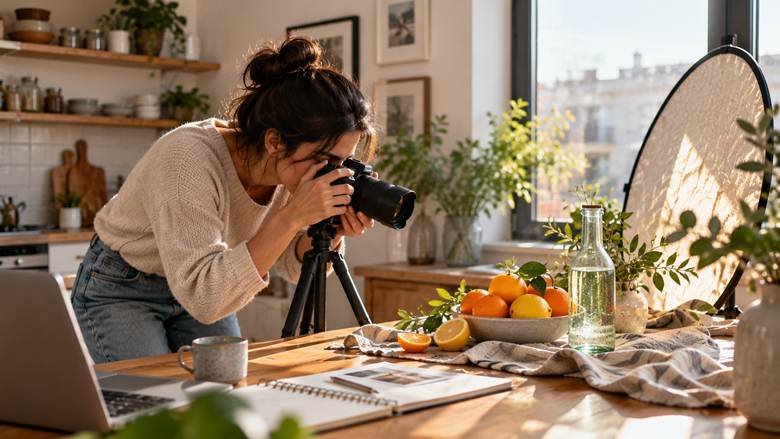
Photograph an everyday object—a mug, book, plant, shoe or bowl of fruit—as if it belonged in a magazine. Try three compositions: straight-on, from above and close-up. Move the object before changing your camera settings.
The lesson: composition can transform a familiar subject. If the image feels cluttered, remove distractions. If it feels flat, change your angle or move closer. Don’t assume you need a new lens before you’ve tested the framing available to you.
DAY 2 — FOLLOW THE LIGHT
Photograph the same subject near a window in the morning, at midday and later in the afternoon—or compare direct sun with open shade. Notice the direction of shadows, the contrast and the colour of the light.
A reflector or a simple white card can bounce light back into shadows; a curtain can soften strong window light. If lighting becomes a recurring limitation in your work, that’s a useful clue to explore reflectors, diffusers, continuous lights or flash. Adorama’s Learning Center has dedicated photography and lighting tutorials to help you understand the options before you buy.
DAY 3 — TELL A STORY IN FIVE FRAMES
Choose a tiny story: making coffee, getting ready to leave, preparing a meal or setting up a desk. Capture five images: the setting, a wide view, a detail, an action and the final result.
The lesson: a good series needs variety. If every image is a wide shot, the sequence may feel repetitive. If every image is a close-up, the viewer may lose the context. This exercise also translates directly to short-form video, behind-the-scenes content and product storytelling.
DAY 4 — GET CLOSER WITHOUT CROPPING EVERYTHING
Pick a subject with texture—fabric, leaves, food, a tool or a piece of jewellery. Move closer, adjust your angle and look for patterns, edges and small details. Keep the camera steady and check focus carefully.
If you regularly want to photograph tiny subjects, a macro lens or close-up accessory may eventually help. If you mostly want stronger details in everyday scenes, improved light and careful focusing may be enough. The right upgrade depends on the limitation you encounter repeatedly.
DAY 5 — SHOOT A PORTRAIT WITH PURPOSE
Ask a friend or photograph yourself with a timer to make a portrait that says something about the person. Use the background deliberately. Try placing the subject near a window, turning their face slightly toward the light, and leaving some space in the frame.
Notice whether the background distracts, the eyes are sharp and the expression feels natural. A portrait doesn’t automatically need a fast prime lens or a lighting kit. First learn what distance, angle and light do; then decide what equipment might help you repeat the result.
DAY 6 — MAKE A PHOTO THAT FEELS LIKE A PLACE
Go for a walk and photograph a location through three layers: foreground, subject and background. Look for reflections, repeating lines, framing through doorways, colour contrasts or a moment that captures the atmosphere.
If you enjoy landscapes or street photography, this is where a tripod, comfortable strap, weather protection or a different focal length might become relevant. Adorama’s photography guides cover topics from composition and landscape work to travel photography and lens choice.
DAY 7 — EDIT, SEQUENCE, FINISH
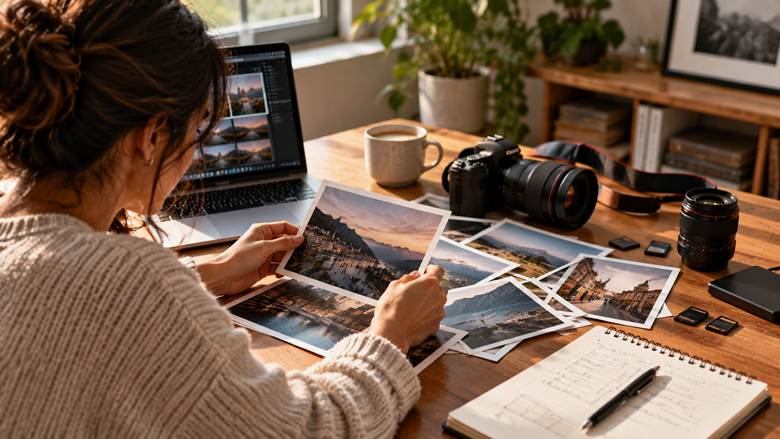
Select your strongest image from each day. Make restrained edits: exposure, white balance, contrast and crop. Then arrange the seven frames in an order that feels intentional. Give the set a title and write one sentence about what you learned.
Finishing the project matters. A folder of hundreds of unreviewed shots makes it difficult to see progress. A small, completed series helps you recognise the subjects, colours and techniques you want to explore further.
NOW YOU’VE EARNED THE RIGHT TO SHOP
Look back at your notes. Did the same problem appear more than once? Match the purchase to the pattern—not to the most persuasive product page.
- WANT MORE REACH? Compare lenses based on the subjects and distances you actually photograph.
- STRUGGLING IN LOW LIGHT? Consider technique, a faster lens, support or lighting depending on whether the subject moves.
- MAKE VIDEO TOO? Think about audio, stabilisation, batteries and storage as part of the whole setup.
- BUILDING A SMALL STUDIO? Compare stands, modifiers and light control before buying multiple lights.
- WORKING ON A BUDGET? Adorama lists pre-owned cameras, lenses and other creative equipment, with condition grades and a stated 30-day return policy for many items; read each listing’s exclusions and warranty details.
The aim isn’t to avoid buying gear forever. It’s to make the next purchase specific enough that you’ll know why you bought it—and whether it helped.
YOUR MINI-PORTFOLIO CHECK
- I have seven selected images, not just seven days of random shots.
- I can name one technique I improved.
- I know which subjects I most enjoy photographing.
- I can describe the technical limitation I keep encountering.
- I’ve researched at least two options before choosing any new gear.
THE TAKEAWAY
Creative progress rarely arrives in the same box as a new camera. It comes from noticing light, composing deliberately, finishing projects and repeating the process. Seven days of focused shooting can teach you more about your needs than an afternoon of browsing specifications.
READY FOR YOUR NEXT CREATIVE CHAPTER? EXPLORE CAMERA GEAR, LIGHTING & ACCESSORIES AT ADORAMA →
Affiliate Disclosure
This article contains an affiliate link. If you make a qualifying purchase through the link, we may earn a commission at no additional cost to you.