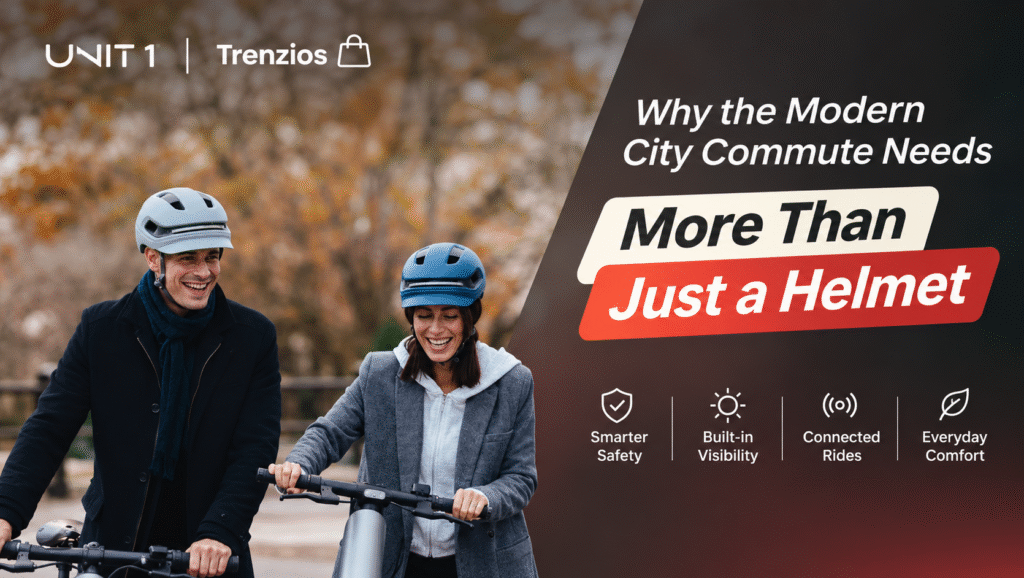
08:12 — The city is already moving
The bike lane narrows. A car is edging toward the curb. Someone steps off the pavement while looking at a phone. You ease off the pedals, check behind you and prepare to turn. In a city, riding is a constant exchange of small signals: position, speed, eye contact and intention. The more clearly other road users can read those signals, the less guesswork there is in the moment.
That is the idea behind a new generation of cycling gear that treats a helmet as more than passive headwear. UNIT 1 builds smart helmets around integrated lighting and, on selected models, turn signals, automatic brake lights and app-connected safety features. The technology does not replace defensive riding or a proper helmet fit. It adds another way to communicate on busy streets.
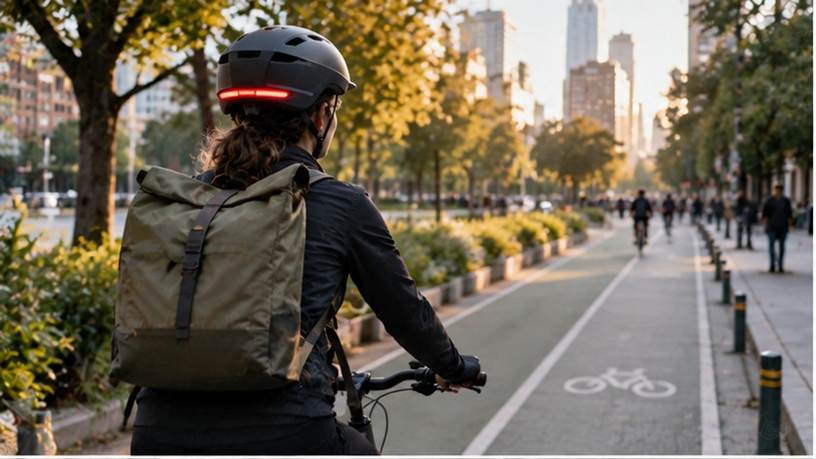
In traffic, visibility is useful. Making your next move easier to understand is even better.
The first message: make yourself easier to notice
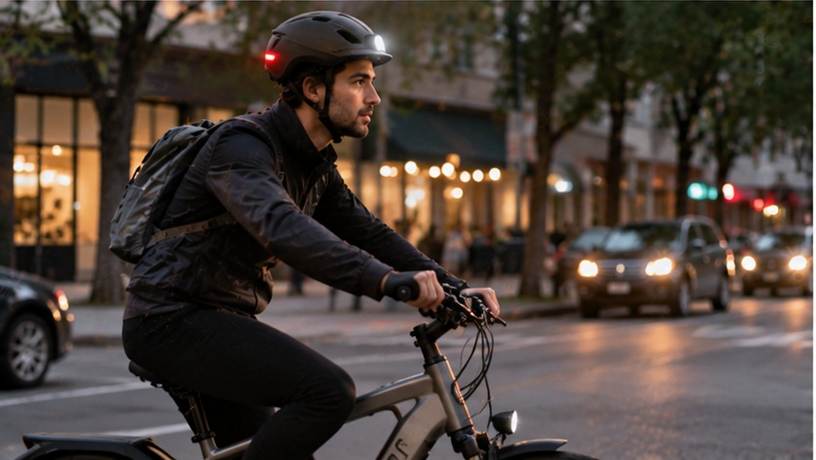
A rear light helps make a cyclist more visible from behind, while front lighting can help with visibility from the opposite direction. UNIT 1‘s adult range is not identical across models: AURA and FARO include front and rear lights, while NEON has a rear light and does not include a front light. That distinction matters when comparing helmets for a commute that includes early mornings or evening travel.
Think about the route before choosing. A well-lit downtown street, an unlit shared path and a road with frequent junctions create different visibility needs. Consider your bike’s own lights too; helmet lighting should complement a suitable bike-light setup, not be treated as its replacement.
The second message: show where you intend to go

A hand signal is a familiar way to communicate a turn, but it can be difficult to use when you need both hands on the handlebars or when visibility is poor. UNIT 1’s AURA, FARO and NEON support turn signals when paired with the separately sold UNIT 1 Remote. The remote lets a rider activate the signal without reaching back toward the helmet.
This is a useful feature to consider if your route involves frequent turns, intersections or lane changes. It is not an invitation to signal and turn without checking. Continue to look, judge traffic, use hand signals where required and make each manoeuvre only when it is safe. Confirm the remote’s compatibility and whether it is included or sold separately before ordering.
The third message: let slowing down be visible
In stop-start traffic, a rider may need to brake suddenly for a pedestrian, a turning vehicle or a queue. Selected UNIT 1 helmets provide an automatic brake-light function that activates as the rider slows. On supported models, this adds a rear-facing cue without requiring the rider to press another button.
The exact feature set varies by helmet. UNIT 1 lists brake lights for AURA, FARO and NEON in its smart-helmet range. Check the model’s current specification and setup instructions, and remember that a brake light is an additional cue—not a guarantee that a driver or pedestrian has seen you.
Which UNIT 1 helmet fits the way you ride?
| Model | Best match | What to know |
| AURA | City and road riding; riders who want a broad smart-feature set | Front and rear lights; turn signals with Remote; automatic brake light; Crash Alert; MIPS versions available; NTA-8776, EN-1078 and CPSC certifications listed. |
| NEON | Everyday city riding and higher-speed e-bike use | Rear light; turn signals with Remote; automatic brake light; Crash Alert; Safety ID; NTA-8776, EN-1078 and CPSC certifications listed. |
| FARO | Urban riding where front, rear and additional hidden lighting are priorities | Front, rear and hidden lights; turn signals with Remote; automatic brake light; Crash Alert; EN-1078 and CPSC certifications listed. |
| SPARKY | Children aged approximately 3–9, within the stated 49–53 cm fit range | Rear RGB light; kid-focused design; EN-1078 and CPSC certifications listed; no adult smart-signal feature set. |
The safety net: connected features and their limits
AURA, FARO and NEON support Crash Alert through the UNIT 1 App. According to UNIT 1‘s help and terms pages, the feature is optional and requires setup, a compatible helmet, an active Bluetooth connection, a functioning phone with location and network access, required permissions and a configured emergency contact. After a detected hard impact, the app runs a safety check; if the rider does not cancel it, an SOS message can be sent to the selected contact with location information.
Treat this as an additional layer, not an emergency-response guarantee. It depends on the phone being with you, battery power, connectivity, permissions and correct setup. Test the app configuration before relying on it, keep your phone charged and know how to contact emergency services directly.
18:46 — The ride home

The commute is not made safe by one clever feature. It is a combination of a correctly fitted and certified helmet, visible lighting, predictable riding, awareness of traffic and equipment that suits the route. UNIT 1’s approach is interesting because it brings several of those communication tools into the helmet itself. The best model is the one whose fit, certification and feature set make sense for your actual rides.
MAKE YOUR NEXT RIDE MORE VISIBLE
Compare UNIT 1 smart helmets, check the exact certifications and features, and choose the setup that matches your daily route.
Affiliate disclosure: This article contains an affiliate link. If you make a purchase through it, the publisher may earn a commission at no additional cost to you.